


Some error occured while loading the Quick View. Please close the Quick View and try reloading the page.
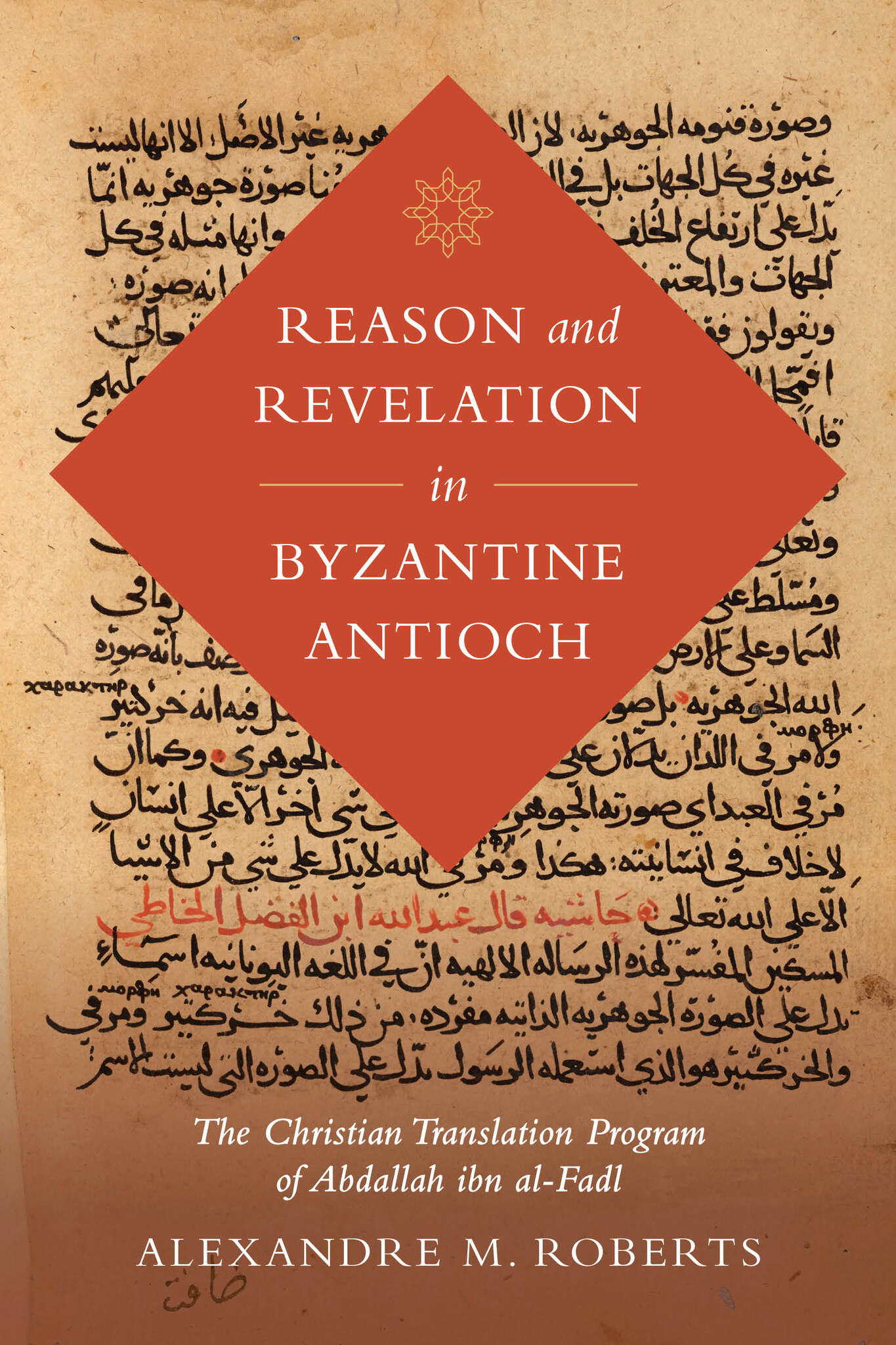
What happened to ancient Greek thought after Antiquity? What impact did Abrahamic religions have on medieval Byzantine and Islamic scholars who adapted and reinvigorated this ancient philosophical heritage? Reason and Revelation in Byzantine Antioch tackles these questions by examining the work of the eleventh-century Christian theologian Abdallah ibn al-Fadl, who undertook an ambitious program of translating Greek texts, ancient and contemporary, into Arabic. Poised between the Byzantine Empire that controlled his home city of Antioch and the Arabic-speaking cultural universe of Syria-Palestine, Egypt, Aleppo, and Iraq, Ibn al-Fadl engaged intensely with both Greek and Arabic philosophy, science, and literary culture. Challenging the common narrative that treats Christian and Muslim scholars in almost total isolation from each other in the Middle Ages, Alexandre M. Roberts reveals a shared culture of robust intellectual curiosity in the service of tradition that has had a lasting role in Eurasian intellectual history.

"Roberts has produced not only an impressive work of intellectual and social history but also an accomplished exemplar of the exploration of unpublished sources with insightful philological and linguistic examinations."
Introduction
PART I. TRANSLATION
1. A Scholar and His City
§1 Abdallāh ibn al-Fada of Antioch
§2 Byzantine Antioch
2. A Translation Program
§1 Scripture and Liturgy
§2 Late Antique Biblical Exegesis
§3 Pro-Chalcedonian Dogma at the Dawn of Islam
§4 Collected Wisdom
§5 In Praise of Saints
§6 Conclusion
3. A Byzantine Ecclesiastical Curriculum
§1 Greek Manuscripts
§2 Chrysostom and the Cappadocian Fathers
§3 Orthodoxy, Education, and Orations for Saints
§4 Contemporary Georgian Translators
§5 Georgian Book Culture
§6 Conclusion
PART II. PHILOSOPHY
4. Purpose in the Prefaces
§1 The Psalter
§2 The Garden
§3 Demetrios
§4 Isaac the Syrian
§5 Chrysostom and Paul
§6 Kaisarios and a Litany of Philosophical Questions
§7 Conclusion
5. Education in the Margins
§1 The Garden
§2 Sophronios
§3 John of Thessaloniki
§4 Chrysostom on Hebrews: Substantial Images
§5 Conclusion
6. Logic
§1 Moses Contemplating: Beings, Substances, and Accident
§2 Dog Logic and the Arabic Aristotle
§3 Logic in the Garden
§4 Conclusion
7. Physics
§1 Types of Causes
§2 Qualities as Bodies or Nothing at All
§3 Relative Corporeality of Angels
§4 Matter and Atoms, Plenum and Void
§5 Conclusion
8. Cosmology
§1 The Sky’s Elements
§2 Infinity and the Eternity of the World
9. Astronomy
§1 Translating Astronomical Terminology
§2 The Stars, Byzantine Marginalia, and an Arabophone Byzantine Astronomer
§3 Astrology
§4 Conclusion
10. A Shared Scholarly Culture
§1 Method and Madness
§2 Twin Paideias
§3 West of Samarqand
Bibliography
General Index
Arabic Index
Greek Index
Index of Manuscripts